COP31 and the Yorkshire coast
Delivering climate adaptation in practice
Between the 9th and 20th of November 2026, COP31 in Antalya, Türkiye takes place to advance global action on climate change. Adaptation is part of that discussion: preparing for current and future climate impacts and reducing their consequences for people and the environment. UNFCCC emphasises that successful adaptation responds to local circumstances, draws on the best available science and involves the communities affected.
For communities along Yorkshire’s coast and the Humber Estuary, decisions about coastal protection impact homes, businesses, transport connections and places people value. A defence may need to withstand tidal flooding, slow the erosion of a vulnerable shoreline or strengthen a structure that has protected a town for generations. Understanding those varying requirements is the starting point for deciding where and how to invest.
Understanding the risk before choosing the response
Through our frameworks, we support public sector clients in appointing the right consultants and contractors needed to deliver infrastructure projects. COP31 provides an opportunity to look at how those clients and their project teams have approached coastal protection across our region. Their work illustrates the decisions involved, from assessing future conditions to selecting construction methods and incorporating habitat into engineered structures.
Flooding and erosion can affect the same stretch of coastline, but they present different problems. Tidal flooding can saturate the land, while erosion removes material from the shoreline and can undermine structures or threaten the land behind them. A scheme therefore needs to respond to the processes at work in its particular location.

In Hessle, the consequences of tidal flooding were demonstrated by the 2013 surge, which flooded 40 homes and 44 businesses. Subsequent modelling identified risks associated with rising sea levels to homes and infrastructure, including the A63 and the railway into Hull.
East Riding of Yorkshire Council’s scheme drew on data exploring different surge scenarios, return events and climate change assumptions. The resulting defence completed by Tilbury Douglas, included a 465-metre glass and concrete wall with a 50-year design life. Its design allowed for the defence height to be increased in future by replacing the glass panels.
For public sector clients, this illustrates the importance of considering how an asset might need to change during its lifetime. Allowing for future intervention at the design stage provides a basis for planning beyond the initial construction programme, alongside addressing the risks already identified.
Designing for an eroding shoreline
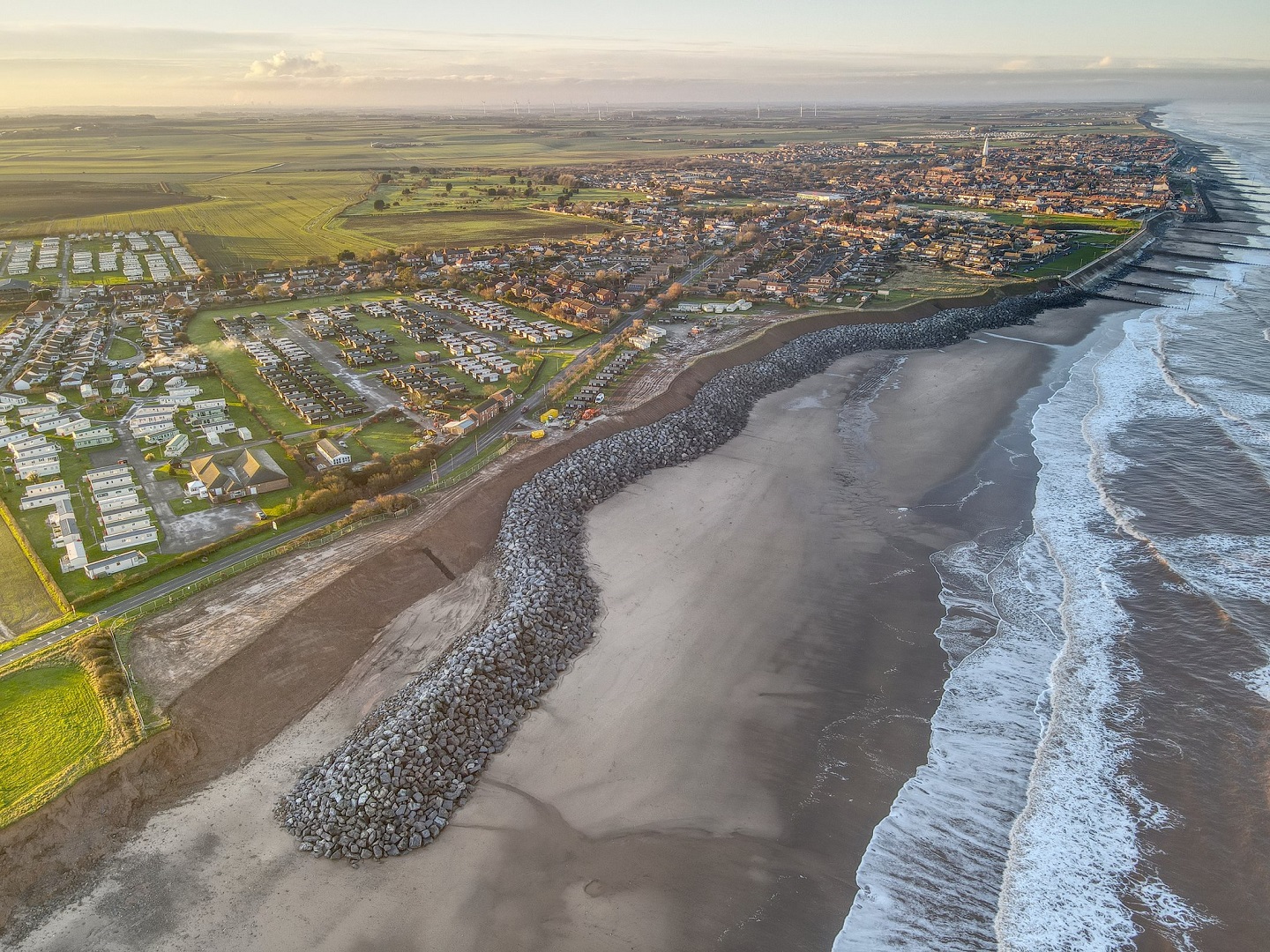
South Withernsea presented a different challenge. Here, rapid coastal erosion threatened property and required an extension to existing defences. Delivered by BAM Nuttall for East Riding of Yorkshire Council through YORcivil2, the scheme added 400 metres of rock armour, with a stated objective of reducing erosion risk to property over the following 100 years.

The size and arrangement of the rocks were central to the response. Most individual pieces weighed between six and ten tonnes, with some reaching fifteen tonnes. These sizes were selected to withstand rough sea conditions and provide protection under potentially worsening conditions associated with climate change. Their interlocking, porous structure helped to withstand the waves. The Construction process itself also had to accommodate the environment the defence would face. Teams worked within tidal windows of around five to six hours, with partially completed sections submerged at high tide. Early consideration of these constraints during project development, establish how the design could be safely delivered on schedule with an exposed shoreline.
Including habitat in coastal protection
Coastal infrastructure relies on environments that also support wildlife. Considering its ecological effects during design creates opportunities to improve the habitat offered by an engineered structure.
At Runswick Bay, Esh Construction delivered a coastal protection scheme for Scarborough Borough Council through YORcivil2. Concrete repairs and granite rock armour strengthened existing sea defences, with the design addressing sea-level rise and storm conditions.
The project also responded to a limitation of conventional coastal structures: they can provide less varied habitat than natural rocky shores. More than 120 rock pools were cut into the granite boulders, alongside over 130 grooved sections intended to accommodate small crustaceans. As documented in our project case study, marine life began populating these features within two weeks.
Runswick Bay shows how attention to the surface and form of construction materials can make provision for wildlife within a protective structure. It also illustrates a wider issue raised in the 2026 Ocean and Climate Change Dialogue: the value of considering climate, biodiversity and sustainable development together. The dialogue’s informal summary identifies this as an area for further action ahead of COP31.
Looking after the defences already in place
Existing seawalls and harbour structures remain part of the response to coastal risk. Their condition, foundations and exposure influence whether repairs and reinforcement can sustain their protective role. In Filey and Bridlington, targeted interventions strengthened existing coastal infrastructure and extended its useful role.
Jackson Civil Engineering refurbished Filey’s historic seawall for North Yorkshire Council through YORcivil2. Storm damage had affected parts of the rock revetment and concrete foundations, prompting targeted replacement and reinforcement. Delivery had to account for tidal conditions, public access and the visitor economy.
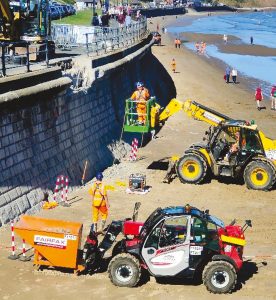
Bridlington’s Coastal Protection Scheme similarly focused on strengthening an existing asset. Esh Construction reinforced vulnerable pier and seawall foundations with 200 metres of steel piling and a concrete capping beam. Rock excavated from the piling trenches was reused to protect the face of the new piles.
Working from the beach allowed the team to use shorter piles than would have been required when piling from barges. This approach saved around 20% on the associated material costs, with the saving passed to the client.
These projects demonstrate the value of examining what can be retained, repaired and reused. Such decisions require an understanding of the existing structure and its surroundings, together with construction methods that suit the site.
Bringing the necessary expertise together
For public sector clients, progressing a coastal scheme involves a sequence of connected decisions. Investigation and modelling inform the design; design must account for environmental constraints and construction access; delivery then needs suitable supervision and coordination.
Our civil engineering and consultancy frameworks provide routes to appoint the expertise needed at these different stages. In Hessle, Mason Clark Associates undertook design through YORconsult2, followed by Tilbury Douglas’s construction appointment through YORcivil2. In Filey, Haskoning provided project management and site supervision through YORconsult, alongside Jackson’s two-stage design and build appointment through YORcivil2.
These appointments show how clients can use our frameworks to bring together the skills their projects require. Councils, consultants and contractors then apply that expertise to the brief, the evidence and the conditions on site, developing and delivering a response suited to the location.
Communication with the surrounding community also formed part of these projects. In Filey, consultation explained the phased programme to residents and businesses, including plans to reduce disruption during the tourist season. Hessle’s development included public consultation and exhibition events. These activities gave people opportunities to understand the proposals and what construction would involve in their area.
Planning for the years ahead
COP31 provides a timely opportunity to examine the local work involved in adaptation. Along Yorkshire’s coast and the Humber Estuary, that work includes assessing tidal risk, responding to erosion, strengthening ageing structures and considering the habitat provided by new defences.
These projects demonstrate why long-term protection demands attention to the particular circumstances of each location. A design objective sets the direction, while inspection, maintenance and review remain important throughout the asset’s life.
Our role is to support public sector clients in accessing the expertise needed to take their projects forward. By sharing the experience of schemes delivered through our frameworks, we can help clients consider the questions that matter for their next investment: what needs protecting, how the risks may change and what the infrastructure will need to do in the years ahead.