World Cities Day 2026
Creating better places
This year’s World Cities Day theme, “Regenerating the City: Adequate Housing for All”, draws attention to one of the most significant challenges facing towns and cities: how to provide housing that not only accommodates growing populations, but is supported by the infrastructure needed for well-connected, thriving communities. In other words, how do we create better places?
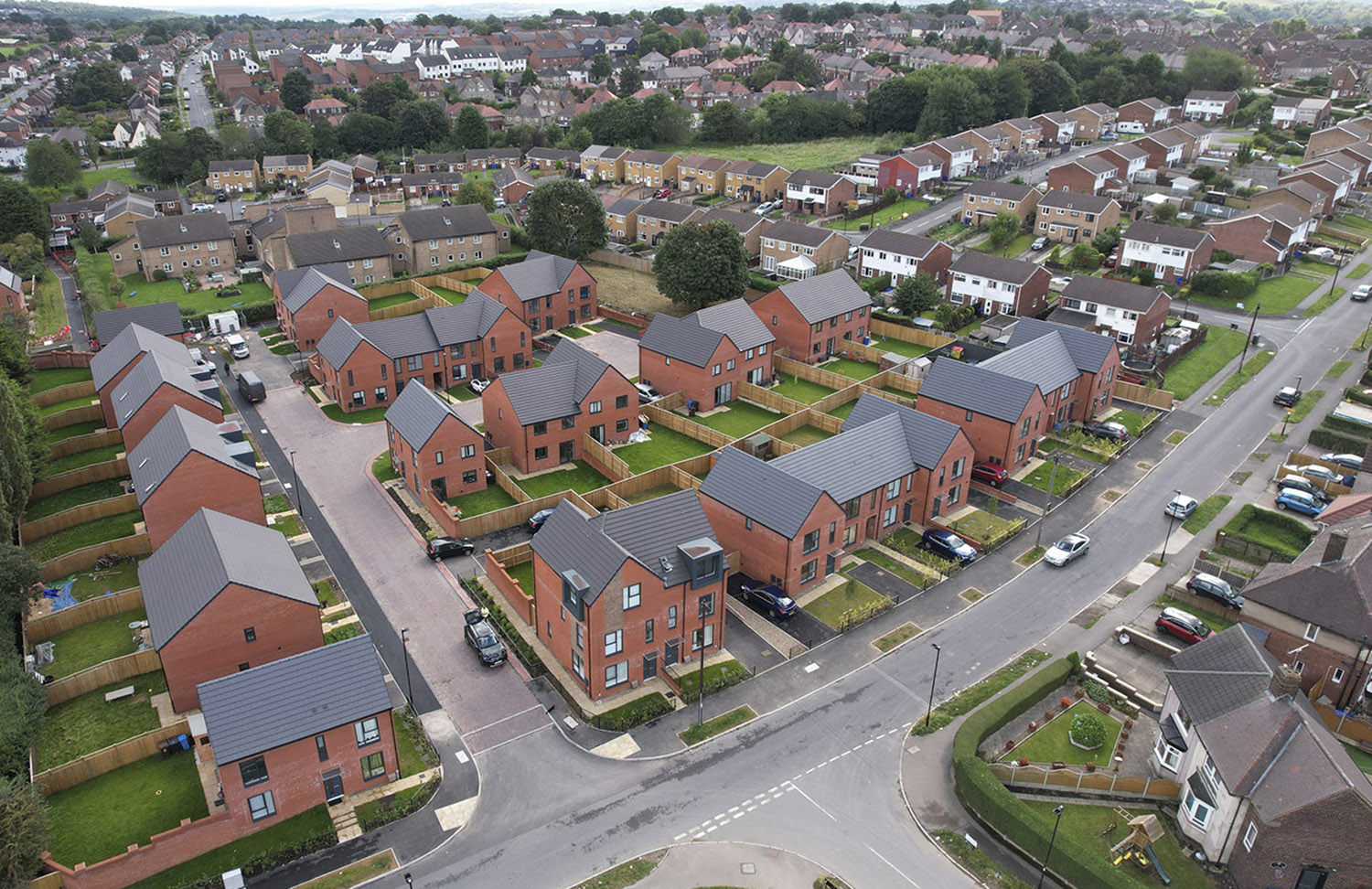
Housing remains at the heart of successful regeneration. Through the YORbuild frameworks, projects such as Parsons Cross for Sheffield Housing Company have helped bring forward new housing on previously developed sites, supporting housing delivery and contributing to the wider regeneration of communities.
However, while suitable and affordable homes remain fundamental, housing alone does not determine quality of life. Access to employment, transport, public services and community facilities all influence whether people can participate fully in economic and civic life. For public sector organisations, the challenge is increasingly about using investment to support connected, inclusive and resilient communities that deliver long-term social, economic and environmental value.
Regeneration projects provide an opportunity to address these wider objectives in a tangible way. Whether through transport infrastructure, public spaces, community facilities or commercial development, investment can influence how people move through a place, access opportunities and engage with their local environment. The most successful schemes are those that recognise these interdependencies and respond to them through a holistic approach to planning and delivery.
Regeneration Begins with Connectivity
The relationship between people and place is strongly influenced by accessibility. Residents need to be able to travel safely and efficiently between homes, employment centres, healthcare facilities, educational institutions and leisure destinations. Consequently, transport infrastructure often performs a broader role than simply facilitating movement; it shapes access to opportunity.
Walking and cycling infrastructure play an important role in supporting active travel, reducing reliance on private vehicles and improving access to local services, while strengthening connections between neighbourhoods.
Accessibility must also be understood in its broadest sense. The quality of a route cannot be judged solely by distance travelled. Changes in level, physical barriers, poor pedestrian environments and inaccessible crossings can all affect how easily people are able to navigate an area. Inclusive design therefore requires consideration of the entire journey, ensuring that infrastructure can be used safely and independently by people of all ages and abilities.
This principle is reflected in projects delivered through YORhub frameworks. In Rotherham, Esh Construction delivered a £4.4 million riverside improvement scheme for Rotherham Metropolitan Borough Council through YORcivil2. The scheme included a new access road and riverside footpath linking Water Lane with the town centre, while also helping address infrastructure requirements associated with future development opportunities.
By improving access and providing enabling infrastructure, the project contributes to wider, future regeneration, strengthening relationships with existing communities.
Similarly, Barnsley’s Market Gate Bridge, delivered through YORcivil2 by Keltbray (now Aureos) for Barnsley Metropolitan Borough Council, demonstrates the importance of accessibility within regeneration. Connecting The Glass Works development with the transport interchange and Market Gate Car Park, the bridge incorporates lifts, tactile paving and provisions for cyclists alongside improvements to the surrounding public realm.
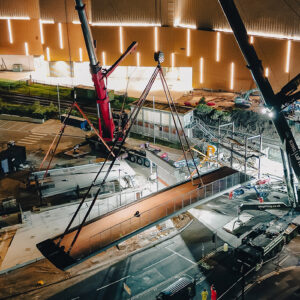
These features support entire journeys rather than isolated movements. A bridge, pathway or transport facility only fulfils its purpose when users can access and continue their journeys with confidence and independence.
Successful Places Support Economic Participation
As town and city centres continue to evolve in response to changing patterns of work, retail and leisure, regeneration increasingly focuses on creating destinations that accommodate a diverse range of uses, bringing together commercial, cultural and community activity within a shared environment.
Bradford’s Darley Street Market provides a useful illustration of this approach. Delivered by Kier for City of Bradford Metropolitan District Council through YORbuild2, the development combines food and beverage retail with a food court and flexible event space, capable of supporting markets, performances and community activities.
Such developments reflect an understanding that places thrive when multiple activities complement one another. Visitors may arrive for retail purposes and remain for leisure activities; events can introduce new audiences to businesses and community organisations; and public spaces can encourage social interaction alongside economic activity.
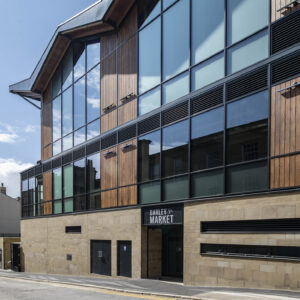
Equally important is the role of local identity. Regeneration is rarely most successful when it seeks to replace the past entirely. Rather, it often achieves the greatest impact when it balances renewal with continuity, retaining elements that contribute to a place’s character, while introducing facilities that meet contemporary needs.
Darley Street Market’s incorporation of restored Victorian cast iron gates from Bradford’s historic Kirkgate Markets demonstrates how this balance can be achieved. In doing so, the project recognises that successful regeneration is not only concerned with economic performance, but also with preserving the cultural and historic distinctiveness that contribute to a community’s sense of place.
Long-Term Value Extends Beyond Construction
The opening of a project often attracts considerable attention. However, the long-term success of public investment depends not on completion alone, but on how effectively an asset continues to function throughout its operational life.
Operational efficiency, maintenance requirements, energy demand and environmental performance all influence the value derived from public assets over time. Decisions made during procurement, design and construction therefore have implications that extend far beyond project handover.
This is particularly relevant as public sector organisations seek to maximise the value of investment while responding to financial pressures and environmental objectives. Increasing emphasis is being placed on whole-life performance rather than initial capital expenditure alone.
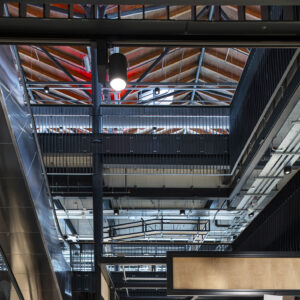
At Darley Street Market, photovoltaic panels, natural ventilation strategies, rainwater harvesting systems and smart building management technologies were incorporated to support operational efficiency and reduce resource consumption. While such measures contribute to environmental objectives, they also support the practical management of the facility throughout its lifespan.
Considering long-term functionality in this way reflects a broader principle of regeneration: the success of a project should be measured not simply by what is delivered, but by how effectively it continues to serve communities in the decades that follow.
Regeneration Should Deliver Benefits During Construction
The impact of regeneration is often associated with completed developments. Yet construction activity itself presents important opportunities for economic and social benefit.
Demand for labour, skills, professional services and construction materials creates the potential for investment to reach beyond the project boundary and into local communities. Whether these opportunities are realised, however, depends significantly on the approach adopted during procurement and delivery.
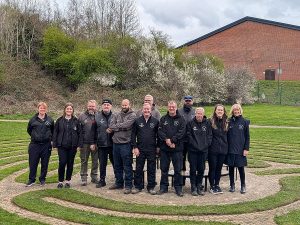
Through YORhub frameworks, social value considerations are embedded alongside more traditional measures of project performance. This enables public sector organisations to pursue broader objectives relating to employment, skills development, supply chain engagement and community benefit as part of project delivery.
The outcomes achieved across projects delivered through YORhub frameworks demonstrate how this approach can generate wider value. During the construction of Rotherham’s riverside improvement scheme, apprentice opportunities, work experience placements and employment support activities were delivered alongside the physical works, providing routes into training and employment for local residents.
Similarly, more than £10 million of expenditure associated with Bradford’s Darley Street Market was directed through local businesses and suppliers, supporting the regional economy during construction as well as creating a new destination upon completion.
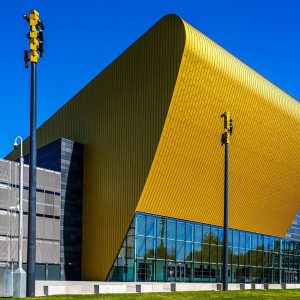
Hull’s Connexin Live arena provides a further example. Delivered by BAM through YORbuild2 for Hull City Council, the project transformed a brownfield city centre site into a major venue for entertainment, conferences and events. During construction, a significant proportion of the workforce was drawn from Hull postcodes, while apprenticeship opportunities helped develop skills within the local labour market.
Meanwhile, support provided through the YOR4Good Fund enabled improvements to facilities at Lighthouse Homes in Rotherham, demonstrating how construction projects can create direct benefits for community organisations alongside their primary objectives.
These examples illustrate a fundamental principle of public procurement: investment can be structured in a way that generates economic and social value during delivery, rather than solely after completion and is one of YORhub’s key strengths.
The Role of Procurement in Successful Regeneration
Discussions surrounding regeneration frequently focus on planning, design and construction. However, procurement also plays a significant role in determining project outcomes.
The way projects are commissioned influences not only who delivers them, but also the extent to which wider objectives relating to local economic growth, skills development, environmental performance and social value can be achieved. Procurement therefore becomes a means of aligning investment with broader strategic objectives.
Through YORbuild, YORcivil and YORconsult, public sector organisations can access delivery partners within frameworks that embed community benefit, responsible procurement and long-term value within project delivery. This allows infrastructure and construction projects to contribute towards broader place-based outcomes, helping ensure that investment benefits communities as well as the built environment.

Roads can improve access, bridges can enhance mobility and buildings can provide valuable facilities, however, the procurement approach adopted by the client can influence whether those investments also support local businesses, create employment opportunities, develop skills and strengthen communities.
Creating Places Through Regeneration
World Cities Day provides an opportunity to reflect on the relationship between housing, infrastructure and place. They rely upon the ability of people to access services, participate in local economies and engage with their communities. Regeneration is most effective when it recognises these relationships and responds to them holistically to achieve lasting public value and building better places for us all.